Get Osx Uninstaller lifetime license for only $29.95. Flat & one-time purchase. Click here
 Simple to use, powerful when you need it Built natively to be fast, lightweight & efficient Thoroughly uninstall .dmg, .pkg & .mpkg apps Streamlined workflows for complete removal Manage all apps in one place without clutters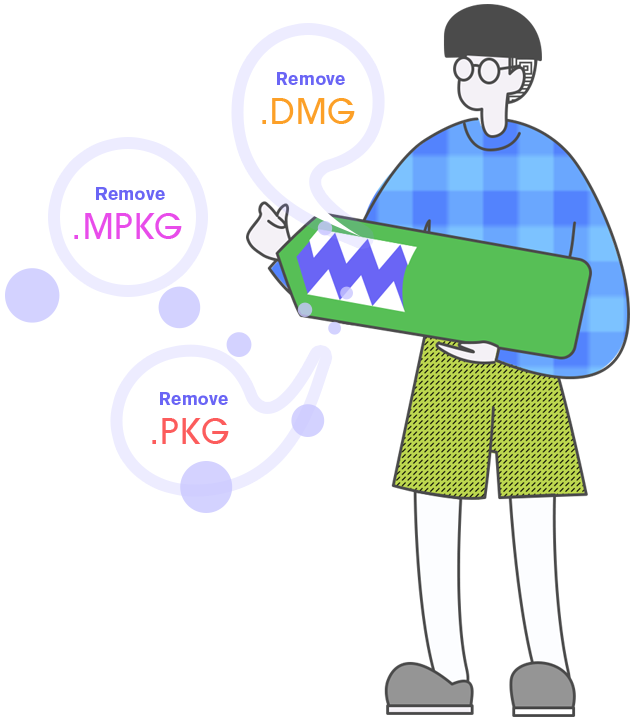


Select or search the to-be-removed app by the name
Osx Uninstaller quickly locates all related files of the app
Review found files, or exclude them before deletion
All files are removed completely out of the box




Packed and distributed via .dmg, .pkg & .mpkg packages, Mac apps are various on where to install on your hard drive, whether to run at startup & background, and settings & permissions are required to access, such as granted permissions of Security & Privacy for installed extensions. These installation options and configurations will make a complete removal for some apps very trivial, time consuming or nearly impossible if you are not a system administrator. The incomplete app removal or uninstallation might stop you from updating or upgrading the app, leave loads of useless files and entries on your disk and slow down your Mac devices.

The deleted app hangs at the menu bar & dock, even after reboot. It overwhelmingly slows down your device.
The useless leftover files and entries of the supposedly-deleted app are found in various sections of your disk, taking up a large amount of drive space.
These deleted apps still run at startup & background, seriously slowing down bootup time & system response time, and even hardly usable on a daily basis.
There are still configurations associated with the deleted apps in the System Preferences like login item, permissions of Security & Privacy and other sections.
After quitting the app and deleting it to the Trash, it still keeps popping up various Windows of notifications, license agreement, and others.
After deleting the app and related files that can be found, there are still many files of the app in Finder.
When a veterinarian looks at a behavioral issue, they first rule out "medical mimics." For instance, a cat that stops using its litter box may not be "spiteful"; it may have feline lower urinary tract disease (FLUTD). A senior dog showing sudden aggression may be suffering from chronic arthritis pain or cognitive dysfunction syndrome (animal dementia). By treating the body, veterinary science often "cures" the behavior. The Role of Psychopharmacology
techniques. By understanding that a cat’s hiss or a dog’s tucked tail is a response to environmental stress rather than "dominance," practitioners can modify their handling. This reduces cortisol levels, making diagnostic tests more accurate and healing faster. When an animal is terrified, its physiological markers (like heart rate and blood glucose) spike, often masking the true medical condition. Behavioral Changes as Diagnostic Tools
Veterinary behaviorists are specialized veterinarians who diagnose and treat complex behavioral disorders using a combination of behavior modification therapy and psychotropic medications. Core Principles of Animal Learning
A degree in this field opens doors far beyond the exam room. Whether you’re interested in research, welfare, or training, the opportunities are vast:
The intersection of animal behavior and veterinary science is a critical area of study that has significant implications for animal welfare, human-animal interactions, and conservation. As our understanding of animal behavior and veterinary science continues to evolve, we can expect to see improvements in animal care, management, and welfare. By integrating knowledge from these two fields, we can promote a better future for animals, humans, and the environment. zoofilia pesada com mulheres e animais extra quality
Understanding Animal Behavior and Veterinary Science Animal behavior and veterinary science are two closely linked fields that shape how we care for domestic, exotic, and wild animals. Historically, veterinary medicine focused primarily on physical health, treating injuries and infections. Today, modern veterinary science recognizes that mental well-being and behavior are just as critical to an animal’s overall health.
The integration of technology and genomics is driving the future of animal behavior and veterinary science.
In animal shelters, chronic stress leads to behavioral deterioration, making animals less adoptable. Shelter veterinarians use behavioral assessments to identify high-risk individuals, implement daily enrichment programs to prevent boredom, and design housing units that maximize privacy and reduce noise. Wildlife and Zoo Management
Whether you're looking for a professional update or a social media hook, here are a few post options for : When a veterinarian looks at a behavioral issue,
Cats are notorious for masking sickness. When a cat begins hiding in dark closets, stops grooming, or ceases jumping onto elevated surfaces, it rarely indicates a sudden personality shift. More often, it points to metabolic illnesses like chronic kidney disease, diabetes, or severe joint pain. Stereotypic and Compulsive Behaviors
Tail-chasing, flank-sucking, or fly-snapping.
For decades, veterinary medicine and animal behavior were treated as two distinct silos. If a dog had a limp, you saw a vet; if a dog bit the mailman, you saw a trainer. Today, that wall has crumbled. The integration of has revolutionized how we care for domestic animals, livestock, and wildlife alike, recognizing that physical health and psychological well-being are inseparable. The Biological Basis of Behavior
Moving away from "scruffing" or forceful restraint in favor of gentle techniques and treats. The Role of Psychopharmacology techniques
The rise of veterinary behavior as a formal specialty has revolutionized clinical practice. The American College of Veterinary Behaviorists (ACVB) certifies veterinarians who specialize specifically in treating complex behavioral pathologies. Stress-Free and Fear-Free Handling
For decades, veterinary medicine and animal behavior operated in silos. Veterinarians focused almost exclusively on the physiology, pathology, and surgery of the animal. Meanwhile, behaviorists and trainers handled obedience, aggression, and psychological conditioning.
To modify animal behavior effectively, veterinary professionals and trainers rely on established scientific principles of learning theory.
Osx Uninstaller is designed to completely remove unwanted apps & associated files and entries, clean up drive space, boost your Mac device performance and level up your productivity. Everything of the app removal is blazing-fastly completed within a few steps.
 $29.95/lifetime Lifetime support Remove macOS apps completely Lifetime updates & new versions
30-day money back guarantee