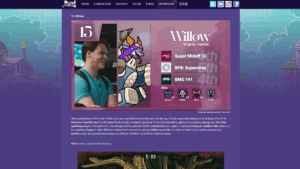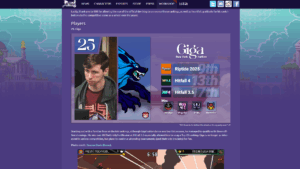

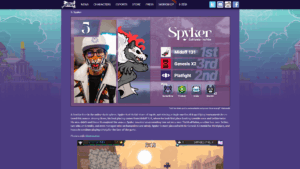
Rivals 1 Community Rankings 2025: #5 – 1
03/04/20260

The transgender community is an integral and vibrant part of the broader LGBTQ+ (Lesbian, Gay, Bisexual, Transgender, Queer/Questioning, and others) culture. While often grouped together, it is important to understand both their distinct experiences and how they intersect.
The platform will be designed with accessibility in mind, ensuring it's easy to navigate for users of all tech-savviness levels.
The current political landscape features a high volume of targeted legislation. These bills often aim to restrict access to gender-affirming healthcare for youth and adults, ban trans individuals from sports, and restrict the discussion of gender identity in schools. Advocacy groups work continuously to challenge these laws in court. Systemic Inequality
The LGBTQ+ community is an umbrella for people diverse in gender, sex, and sexual orientation. Understanding the nuances of identity is critical for accurate representation:
No discussion of this relationship is complete without addressing the elephant in the room: . While a minority in the broader population, this ideology—which argues that trans women are not "real" women but infiltrators of female-only spaces—has found footholds in certain lesbian and feminist circles, particularly in the UK and parts of North America.
So, where does the relationship stand? The analogy of a is useful. Like siblings, the transgender community and the broader LGBTQ culture share parents (oppression, Stonewall, the AIDS crisis) and a last name (Queer). But they have different needs, different doctors, and different enemies.
This subculture birthed "voguing" and popularized linguistic terms now embedded in global pop culture, such as "spilling tea," "throwing shade," "work," and "serving looks." Media and Representation
The modern LGBTQ+ rights movement didn’t start in boardrooms; it started in the streets, led largely by transgender women of color. Figures like and Sylvia Rivera were at the forefront of the 1969 Stonewall Uprising. At the time, the distinction between "gay" and "transgender" was less rigid in the public eye—everyone who defied traditional gender and sexual norms was grouped together.
The community is not a monolith; it includes binary trans men and women, as well as non-binary , genderqueer , and genderfluid individuals. This diversity challenges the traditional gender binary, encouraging society to view gender as a broad spectrum. Shared Struggles and Triumphs
Sylvia Rivera, in a famous 1973 speech, was booed off stage at a gay pride rally for trying to speak about the plight of trans inmates and drag queens. She yelled, "You all tell me, ‘Go and hide… Go to your room.’ You’ve forgotten the essence of our movement.” This moment encapsulates the historical tension: the transgender community reminds LGBTQ culture that liberation is not about assimilation into cis-heteronormative society, but about dismantling the binary entirely.
The transgender community is an integral and vibrant part of the broader LGBTQ+ (Lesbian, Gay, Bisexual, Transgender, Queer/Questioning, and others) culture. While often grouped together, it is important to understand both their distinct experiences and how they intersect.
The platform will be designed with accessibility in mind, ensuring it's easy to navigate for users of all tech-savviness levels.
The current political landscape features a high volume of targeted legislation. These bills often aim to restrict access to gender-affirming healthcare for youth and adults, ban trans individuals from sports, and restrict the discussion of gender identity in schools. Advocacy groups work continuously to challenge these laws in court. Systemic Inequality shemale video porno
The LGBTQ+ community is an umbrella for people diverse in gender, sex, and sexual orientation. Understanding the nuances of identity is critical for accurate representation:
No discussion of this relationship is complete without addressing the elephant in the room: . While a minority in the broader population, this ideology—which argues that trans women are not "real" women but infiltrators of female-only spaces—has found footholds in certain lesbian and feminist circles, particularly in the UK and parts of North America. The transgender community is an integral and vibrant
So, where does the relationship stand? The analogy of a is useful. Like siblings, the transgender community and the broader LGBTQ culture share parents (oppression, Stonewall, the AIDS crisis) and a last name (Queer). But they have different needs, different doctors, and different enemies.
This subculture birthed "voguing" and popularized linguistic terms now embedded in global pop culture, such as "spilling tea," "throwing shade," "work," and "serving looks." Media and Representation The current political landscape features a high volume
The modern LGBTQ+ rights movement didn’t start in boardrooms; it started in the streets, led largely by transgender women of color. Figures like and Sylvia Rivera were at the forefront of the 1969 Stonewall Uprising. At the time, the distinction between "gay" and "transgender" was less rigid in the public eye—everyone who defied traditional gender and sexual norms was grouped together.
The community is not a monolith; it includes binary trans men and women, as well as non-binary , genderqueer , and genderfluid individuals. This diversity challenges the traditional gender binary, encouraging society to view gender as a broad spectrum. Shared Struggles and Triumphs
Sylvia Rivera, in a famous 1973 speech, was booed off stage at a gay pride rally for trying to speak about the plight of trans inmates and drag queens. She yelled, "You all tell me, ‘Go and hide… Go to your room.’ You’ve forgotten the essence of our movement.” This moment encapsulates the historical tension: the transgender community reminds LGBTQ culture that liberation is not about assimilation into cis-heteronormative society, but about dismantling the binary entirely.