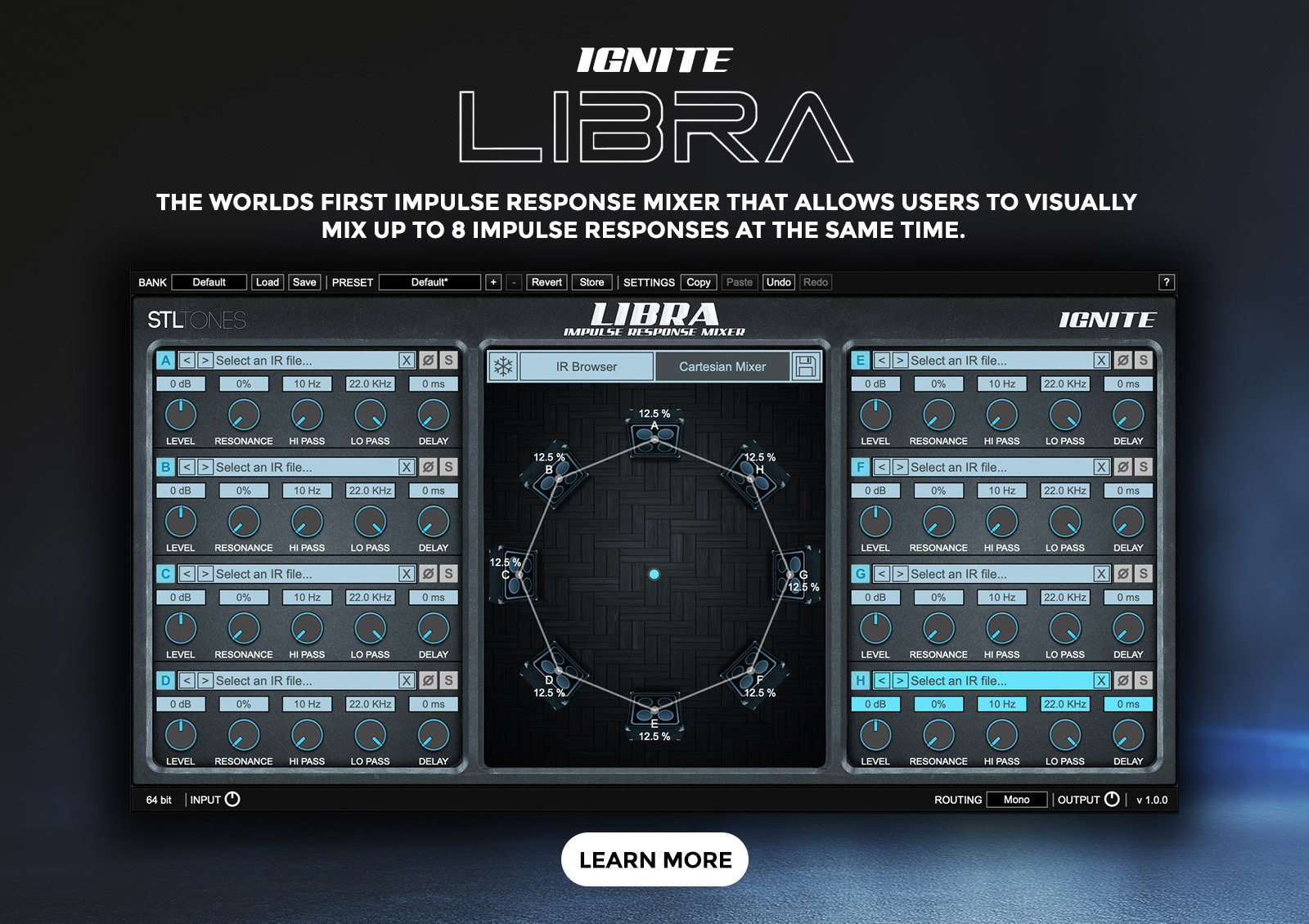
The Ignite Amps project was born in 2006, by the desire of two musicians to come out of the canons of the conventional amplification music market, trying to undermine the need to adapt to "pre-packaged" products. Our approach was simply to start building what we needed.
We've been coding our amp simulations since 2009 and we know a thing or two about how analog modeling works by now. Our plugins are known worldwide and recognized by many as the best out there. Try us: ask us for your custom physical amplifier and we'll provide you with an incredibly accurate software simulation for it before we even start the actual build, so you can try the simulation and feedback us to get to your exact dream amplifier.
SoftwareAfter simulating your custom amp using our state of the art software, we can start the physical build. This is something we do with great pride and passion, taking inspiration from the best Italian engineers and crasftsmen that during the last century created some of what now are the best car brands in the world. Top shelf engineering paired with passionate, dedicated work for the ultimate tone.
HardwareThe guide covers a wide range of topics, including:
Are there you are currently struggling to play along with? Share public link
"The Essence of Jazz Drumming" is a comprehensive guide that covers the fundamental principles, techniques, and concepts of jazz drumming. Written in a clear and concise manner, the book is designed to be accessible to drummers of all levels, from beginners to advanced players. Blackley's approach focuses on the development of essential skills, including timekeeping, improvisation, and musicality. Through a combination of written lessons, musical examples, and accompanying audio tracks, Blackley provides a structured and engaging learning experience.
Born in Scotland in 1927, Jim Blackley initially made his name in the competitive world of Scottish pipe band drumming. However, a transformative experience hearing Max Roach in Toronto redirected his soul toward jazz. He spent years in the heart of the New York jazz scene before settling in Canada, where he became the country’s most influential jazz drumming educator. The Essence of Jazz Drumming His seminal work, The Essence of Jazz Drumming
Jim Blackley (1927–2017) was a Scottish-Canadian educator whose teaching transcended mere technique. His primary tenet was that a drummer must be a . He famously advocated for drummers to learn the piano, sing melodies, and understand the harmonic structure of the 12-bar blues and 32-bar standards. FOUR ON THE FLOOR: The Legacy of Jim Blackley
Do you have you are currently working through? Share public link
Traditional drumming books often teach you to superimpose rudiments (paradiddles, flams, ratsamacues) over a jazz timebeat. Blackley took the opposite approach. He utilized vocalized phrases, poetry, and standard song forms (like the 12-bar blues and 32-bar AABA structures) to dictate what the hands and feet should play. Internalizing the Melodic Structure
The Essence of Jazz Drumming is famously demanding. One of its most frequently cited exercises is to practice quarter notes on the bass drum and backbeats on the hi-hat very softly with a metronome starting at a glacially slow . This method forces a focused, meditative approach to timekeeping that is central to Blackley's philosophy.
: The ride cymbal is the primary voice for stating time. Blackley uses specific notation: long dashes for full strokes and dots for light taps or drop strokes. Outer vs. Inner Lines :
Finding that best illustrate Blackley’s concepts.
Just let me know.
So, what are the key takeaways from "The Essence of Jazz Drumming"? Here are a few highlights:
To help you get the most out of your jazz drumming study, let me know:
In the realm of percussion pedagogy, few names command as much quiet reverence as Jim Blackley. A master teacher, philosopher, and bassist-turned-drummer, Blackley spent decades reshaping how musicians approach the drum set. His seminal work, The Essence of Jazz Drumming , remains a holy grail for serious students of the instrument.
The Essence of Jazz Drumming is filled with innovative concepts that move beyond standard jazz pedagogy. A detailed analysis of the book's sixth chapter, which begins on page 97, reveals some of its most potent ideas:
The book embraces the oral tradition of jazz. It explains how the term "bebop" is derived from a rhythmic figure ("be-BOP") and encourages the use of similar mnemonics to help hear and feel the long and short sounds of rhythms. This approach leads to a more natural, vocalized interpretation of the music.
Are you struggling with a (like independence, ride cymbal feel, or up-tempo playing)?
The guide covers a wide range of topics, including:
Are there you are currently struggling to play along with? Share public link
"The Essence of Jazz Drumming" is a comprehensive guide that covers the fundamental principles, techniques, and concepts of jazz drumming. Written in a clear and concise manner, the book is designed to be accessible to drummers of all levels, from beginners to advanced players. Blackley's approach focuses on the development of essential skills, including timekeeping, improvisation, and musicality. Through a combination of written lessons, musical examples, and accompanying audio tracks, Blackley provides a structured and engaging learning experience.
Born in Scotland in 1927, Jim Blackley initially made his name in the competitive world of Scottish pipe band drumming. However, a transformative experience hearing Max Roach in Toronto redirected his soul toward jazz. He spent years in the heart of the New York jazz scene before settling in Canada, where he became the country’s most influential jazz drumming educator. The Essence of Jazz Drumming His seminal work, The Essence of Jazz Drumming
Jim Blackley (1927–2017) was a Scottish-Canadian educator whose teaching transcended mere technique. His primary tenet was that a drummer must be a . He famously advocated for drummers to learn the piano, sing melodies, and understand the harmonic structure of the 12-bar blues and 32-bar standards. FOUR ON THE FLOOR: The Legacy of Jim Blackley jim blackley the essence of jazz drumming pdf
Do you have you are currently working through? Share public link
Traditional drumming books often teach you to superimpose rudiments (paradiddles, flams, ratsamacues) over a jazz timebeat. Blackley took the opposite approach. He utilized vocalized phrases, poetry, and standard song forms (like the 12-bar blues and 32-bar AABA structures) to dictate what the hands and feet should play. Internalizing the Melodic Structure
The Essence of Jazz Drumming is famously demanding. One of its most frequently cited exercises is to practice quarter notes on the bass drum and backbeats on the hi-hat very softly with a metronome starting at a glacially slow . This method forces a focused, meditative approach to timekeeping that is central to Blackley's philosophy.
: The ride cymbal is the primary voice for stating time. Blackley uses specific notation: long dashes for full strokes and dots for light taps or drop strokes. Outer vs. Inner Lines : The guide covers a wide range of topics,
Finding that best illustrate Blackley’s concepts.
Just let me know.
So, what are the key takeaways from "The Essence of Jazz Drumming"? Here are a few highlights:
To help you get the most out of your jazz drumming study, let me know: Blackley's approach focuses on the development of essential
In the realm of percussion pedagogy, few names command as much quiet reverence as Jim Blackley. A master teacher, philosopher, and bassist-turned-drummer, Blackley spent decades reshaping how musicians approach the drum set. His seminal work, The Essence of Jazz Drumming , remains a holy grail for serious students of the instrument.
The Essence of Jazz Drumming is filled with innovative concepts that move beyond standard jazz pedagogy. A detailed analysis of the book's sixth chapter, which begins on page 97, reveals some of its most potent ideas:
The book embraces the oral tradition of jazz. It explains how the term "bebop" is derived from a rhythmic figure ("be-BOP") and encourages the use of similar mnemonics to help hear and feel the long and short sounds of rhythms. This approach leads to a more natural, vocalized interpretation of the music.
Are you struggling with a (like independence, ride cymbal feel, or up-tempo playing)?