Arcadia is a tooled method devoted to systems & architecture engineering, supported by Capella modelling tool.
It describes the detailed reasoning to
It can be applied to complex systems, equipment, software or hardware architecture definition, especially those dealing with strong constraints to be reconciled (cost, performance, safety, security, reuse, consumption, weight…).
It is intended to be used by most stakeholders in system/product/software or hardware definition and IVVQ as their common engineering reference and collaboration support.
Arcadia stands for ARChitecture Analysis and Design Integrated Approach.
A series of online documents to dive into the principles and concepts of Arcadia:
Arcadia is a system engineering method based on the use of models, with a focus on the collaborative definition, evaluation and exploitation of its architecture.
This book describes the fundamentals of the method and its contribution to engineering issues such as requirements management, product line, system supervision, and integration, verification and validation (IVV). It provides a reference for the modeling language defined by Arcadia.
Jean-Luc Voirin, leader of the creation of the Arcadia method, along with some of the leaders on developing and deploying MBSE Arcadia & Capella practices in Thales. From right to left: Pierre Nowodzienski, Jean-Luc Voirin, Juan Navas, Stephane Bonnet, Frederic Maraux, Gerald Garcia, Philippe Fournies, Eric Lepicier.
Architecture as prime engineering driver
Arcadia, a model-based engineering method
Noticeable features of Arcadia
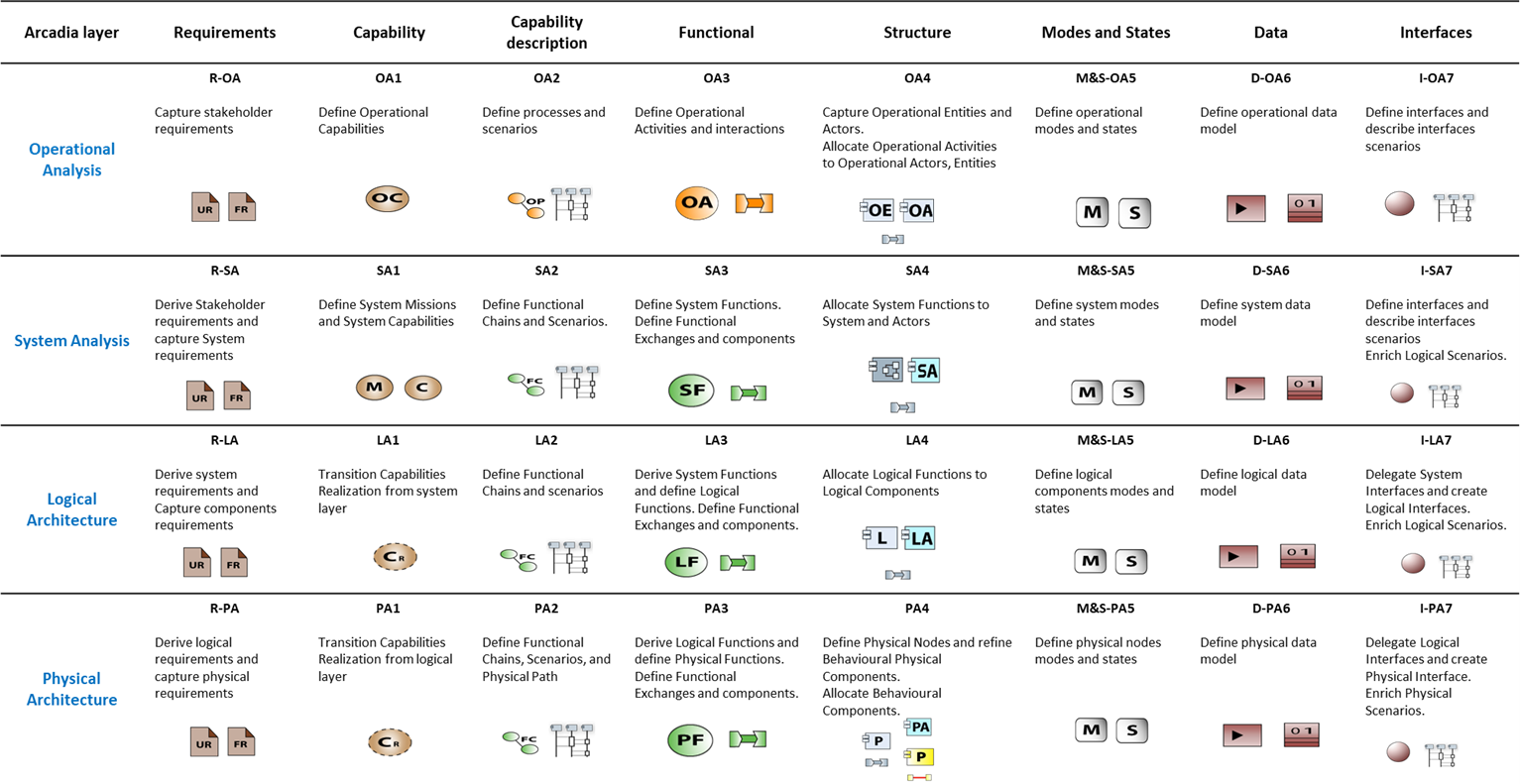
Definition of the Problem - Customer Operational Need Analysis
Formalization of system requirements - System Need Analysis
Development of System Architectural Design - Logical Architecture (Notional Solution)
Development of System Architecture - Physical Architecture
Formalize Components Requirements - Contracts for Development and IVVQ
Co-Engineering, Sub-Contracting and Multi-Level Engineering
Adaptation of Arcadia to Dedicated Domains, Contexts, Etc.
Equivalences and Differences between SysML and Arcadia/Capella
If you still want to download the software from third-party sources, make sure to follow these precautions:
Close the software, reopen Device Manager, and verify that the COM port number matches the setting selected inside the CPS interface.
The Motorola Mag One A8 is a reliable, entry-level analog portable radio widely used in security and business. Proper programming is essential for setting frequencies, privacy codes (PL/DPL), and button functions.
A computer running Windows 7, 8, 10, or 11. Download Motorola Mag One A8 Programming Software
To successfully program your Motorola Mag One A8, you will need the following hardware and setup: Programming Cable
Older cables use a 9-pin serial connector. If your PC lacks a native serial port, you will need a reliable USB-to-Serial adapter. USB Driver Installation
A PC running Windows (Windows 10 or Windows 11) is required, as legacy Motorola CPS does not function natively on macOS. The Software: The dedicated Mag One CPS application. If you still want to download the software
The Motorola Mag One A8 is an entry-level analog radio designed for small businesses . Programming it requires specific and a compatible hardware cable. Software Access & Versions
If you're using a USB programming cable (rather than an older serial port cable), you will likely need to install USB drivers for your computer to recognize the device. The installation process may vary:
: If you require a licensed, legal version for business use, Radiotronics UK A computer running Windows 7, 8, 10, or 11
Download a newer or region-specific version of the Mag One A8 CPS. Counterfeit PL2303 USB chip or outdated driver.
Assign specific UHF or VHF frequencies to the 16 available channels.